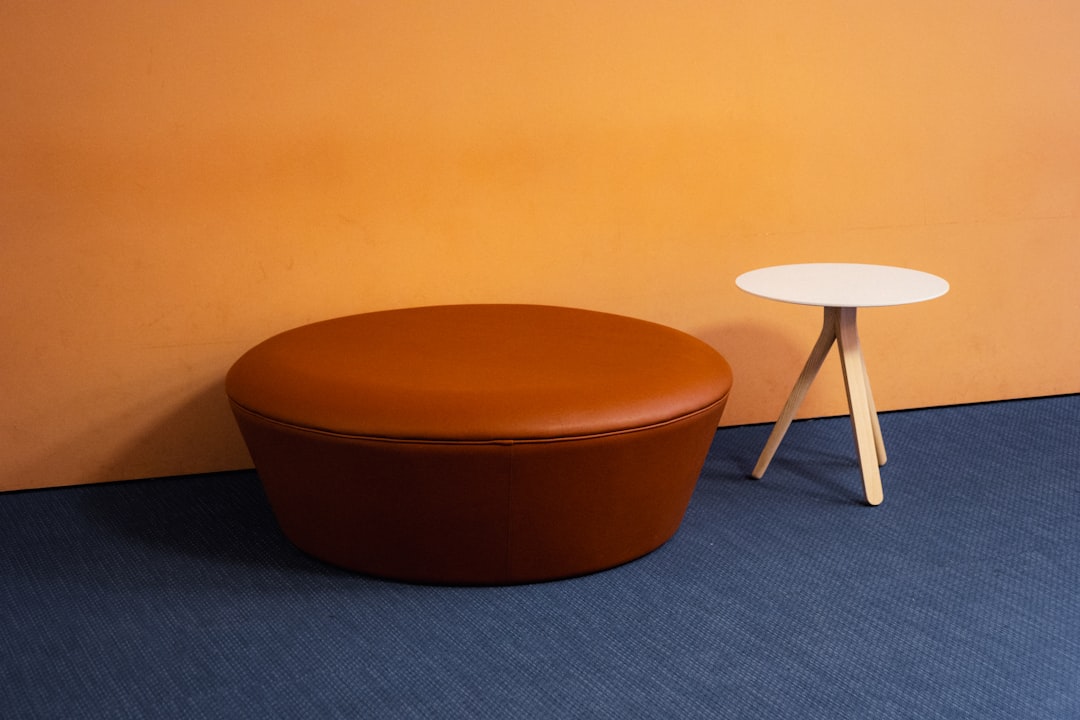
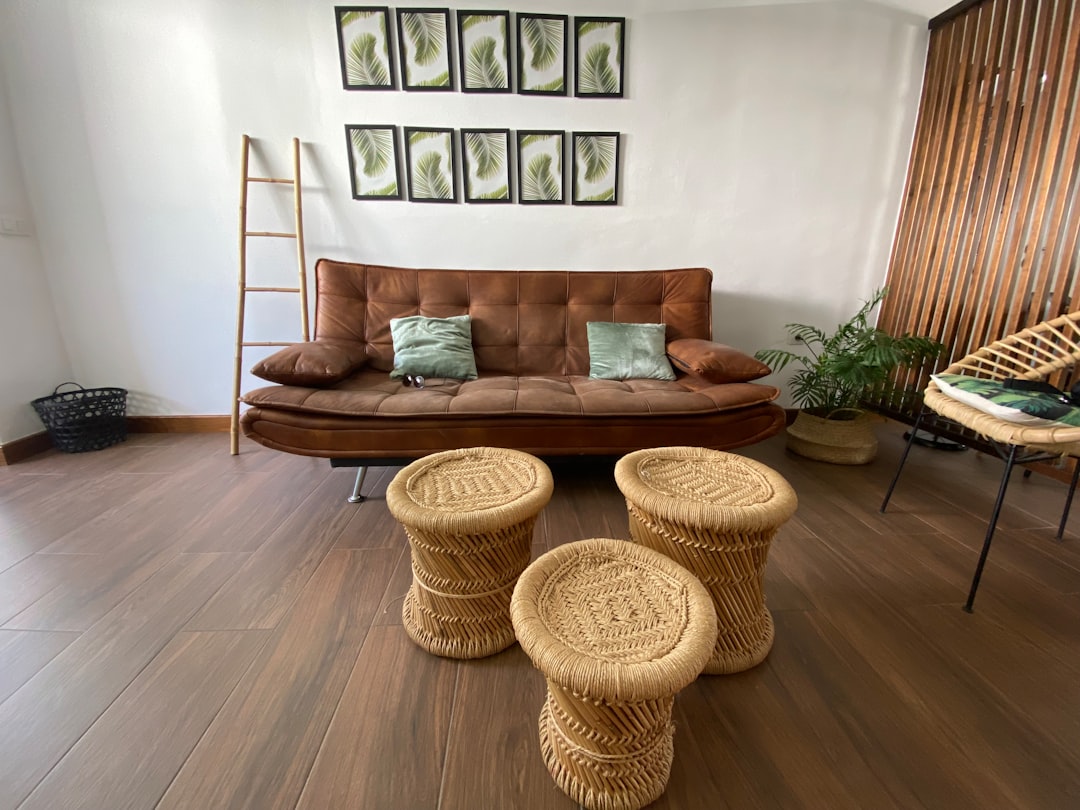
HDB living rooms punish oversized ottomans mercilessly. An ottoman is one of the most under-rated pieces in a small Singapore living room — extra seating when guests come over, footrest during the daily wind-down, sometimes a coffee-table substitute when the room layout demands flexibility. Megafurniture's Ottoman collection covers footrest, square, lift-top storage, and round designs in fabric, leather, faux leather, velvet, and rattan. Lift-top storage variants typically hold 60–80 litres of contents — useful for blankets, board games, or seasonal items.. That 90cm-wide storage ottoman you envisioned as a coffee table alternative? It’ll block the path to the balcony, force residents to sidle past sideways, and collect bruises from shins bumping its corners nightly. For most 4-room BTO layouts, stick to 60×60cm squares — large enough to serve as impromptu seating when relatives visit during CNY, small enough to tuck under console tables afterward.
Rectangular ottomans work only if you’ve got a landed property’s sprawling living area or one of those rare HDB flats with an L-shaped sofa zone. Even then, cap dimensions at 90×120cm unless you enjoy playing human Tetris every time someone needs to reach the TV console. The worst offenders are those 140cm-long monstrosities marketed as “dual-purpose benches” — in reality, they just bisect the room like a fallen tree trunk.
Material choices matter nearly as much as dimensions. The ottoman stool sits in the middle ground between footrest and proper seating — taller than a pure footrest, more compact than a chair, easier to move than either. Megafurniture's Ottoman Stool range covers fabric-upholstered, faux-leather, velvet, and natural-fibre designs across heights from 35cm low footrests through 50cm proper stool heights. Most pieces fit comfortably alongside HDB and condominium sofas without crowding tight living rooms.. Performance fabrics like Crypton or Sunbrella withstand the inevitable kopi spills during mahjong sessions, while genuine leather (not PU) develops character marks instead of permanent stains. Skip tufted designs if your flat houses cats — those button details become irresistible clawing targets within days.
Smart buyers match ottoman height to their sofa’s seat level (±5cm). Too low and you’ll strain your knees using it as a footrest; too high and it feels like perching on a bar stool. For storage models, test the lid mechanism with one hand while holding a toddler in the other arm — because that’s exactly how you’ll be opening it in real life.
Megafurniture’s Joo Seng showroom keeps a 12sqm mock HDB living room setup specifically for testing furniture spacing. Their 58×58cm velvet ottoman fits flush against the base of most recliners without dominating the room.
Singapore’s humidity doesn’t just frizz hair—it warps untreated wood within months. That rattan ottoman you loved at the showroom? By year’s end, the weave loosens like overcooked noodles, the frame creaks like a Tiong Bahru walk-up, and the storage compartment smells vaguely of mildew. Opt for powder-coated metal frames or marine-grade plywood instead; they’ll outlast the average HDB lease.
Leather’s a safe bet—full-grain develops character, bonded wipes clean—but skip suede unless you enjoy vacuuming salt stains weekly. For fabric upholstery, look for Crypton or Sunbrella labels; their moisture-wicking tech handles everything from kopi spills to monsoon-season damp. Polyester blends are workhorses, but check the weave density—anything under 300 GSM shows wear faster than a Eunos MRT station bench.
Storage ottomans demand extra vigilance. Lift the lid of a poorly sealed unit after rainy season, and you’ll find textbooks warped into abstract art. Rubber gaskets around the hinges help, as do vented designs that let air circulate. Megafurniture’s collection includes models with hidden ventilation slits—useful for stowing winter blankets in our eternal summer.

Skip natural fibers like jute or seagrass unless you’re prepared for biannual anti-fungal sprays. Even then, they’re better suited to air-conditioned condos than humid landed properties. For coastal areas like Pasir Ris or West Coast, synthetic wickers resist salt corrosion better—just hose them down during monsoon season.
The real test comes during February’s endless drizzle. That’s when cheap foam cushions absorb moisture like a sponge, leaving permanent indentations. High-resilience foam with a Dacron wrap dries faster, though it adds $50–$80 to the price. Worth it when you’re not replacing the ottoman every three years.
Bar stools have moved from kitchen-island fixture to mainstream living-room and dining piece — used at breakfast counters, peninsula counters, home bars, and sometimes as additional dining seating in compact HDB layouts. Megafurniture's Bar Stool collection covers wooden, metal, and upholstered designs across counter-height (65cm) and bar-height (75cm) variants. Footrests, swivel mechanisms, and adjustable-height options feature across the range..The best storage ottomans for HDB flats use gas-strut lift mechanisms — they're quieter than spring-loaded versions and won't slam shut on fingers when kids rummage for toys. Look for models where the cushion stays attached at one side; detached lids inevitably end up lost behind sofas in cramped living rooms. Dining benches solve the seat-count problem in compact dining rooms — one bench fits the same wall length as two-to-three chairs while tucking under the table when not in use. Megafurniture's Dining Bench range includes wooden, upholstered, and metal-frame designs in widths sized to pair with 4-seater through 8-seater dining tables. Modern, Scandinavian, and rustic finishes dominate the line.. Budget options under $200 often skip this feature, requiring two hands to lift while balancing items — a hassle when you're holding folded laundry or holiday decorations. Test the hinge action at showrooms; stiff mechanisms strain wrists over time, especially on deeper 45cm models storing bulkier items.
Standard 45cm ottomans swallow two queen-size comforters or six folded throws — but only if you compress them first with vacuum bags. Families using ottomans for seasonal storage often underestimate how much space padded winter coats or CNY decorations consume; measure your bulkiest items before choosing dimensions. Some rectangular designs include interior dividers, letting you separate plush toys from guest bedding without everything becoming a tangled mess. Go for at least 35cm interior depth if storing folded bedsheets; shallower 25cm options barely fit one set before the lid strains.
Ottomans doubling as footrests must align with your sofa's seat height — typically 40-45cm for most recliners sold in Singapore, though lower 35cm models suit elderly buyers. The worst offenders are 50cm storage cubes marketed as ottomans; they force taller users into awkward knee angles that strain backs during movie nights. Measure from floor to sofa cushion before buying; even a 5cm mismatch causes discomfort over two-hour Netflix sessions. Deep-seated sectionals need proportionally taller ottomans, especially if your HDB living room uses platform seating without standard legs.
Square 45cm ottomans waste less space than round ones when wedged between sofa arms and TV consoles in narrow HDB layouts. Angled designs with one tapered side maximise walkways in 4-room BTO living rooms where every 10cm counts — look for trapezoid shapes if your seating floats mid-room. Avoid models with outward-facing hinges; they snag passing ankles in tight spaces under 2m wide. For L-shaped sofas, two smaller 35cm ottomans often function better than one large unit, creating flexible pathways when guests need to squeeze past.
Performance fabrics like Crypton or microfiber outperform leather in humid flats — they resist sticky toddler fingerprints and won't crack when stored near aircon vents. Darker patterns hide scuff marks better than solid beige, though busy prints date faster in minimalist HDB interiors. Check cushion density if using the ottoman as impromptu seating; 40kg/m³ foam maintains shape better than cheaper 25kg/m³ alternatives after months of being sat on. Removable covers are non-negotiable for families; spills happen, and dry-cleaning whole ottomans costs more than replacing loose covers.
A recliner without its ottoman is like kopi without sugar—technically functional, but missing the point. In Singapore’s compact living rooms, where every centimetre counts, pairing recliners with ottomans demands precision: too high, and your knees jut awkwardly; too low, and circulation cuts off mid-binge. The sweet spot? Match your recliner’s seat height (typically 38–42cm for local designs) to the ottoman’s top surface, allowing thighs to parallel the floor. Depth matters just as much—aim for at least 50cm to support calves without dangling.
Storage ottomans solve two problems at once in HDB flats. A 60cm-square model fits beside most recliners without blocking walkways, while hiding spare blankets or gaming controllers under its lid. Look for weight under 15kg—light enough to shift when guests arrive, heavy enough to stay put during use. Upholstery should withstand bare feet and cat claws; performance fabrics like Crypton or Sunbrella outlast cheaper polyesters by years.
Round ottomans work better than square in tight spaces—no corners to stub toes against when navigating between recliner and TV console. A 45cm diameter suits most adults as a footrest, while 70cm doubles as impromptu seating. Test stability by pressing diagonally on the edge; wobbles mean it’ll tip when used as a step stool.

Megafurniture’s range includes models with removable trays—handy for balancing laptops or curry puffs without sacrificing leg support. Just ensure the tray’s height doesn’t force wrists into awkward angles during use. For recliners near windows, opt for fade-resistant fabrics; afternoon sun bleaches even dark colours within months.
The 90cm-wide ottoman that looked perfect in the showroom becomes a shin-bashing obstacle in a 3-room BTO living room — especially when you’re trying to manoeuvre past it with laundry baskets or groceries. Buyers often underestimate how much floor space gets eaten up by oversized pieces; anything over 70cm wide typically forces awkward detours in layouts under 12 sqm.
Storage ottomans tempt with their dual function, but poorly reinforced frames collapse under real-world use. A family with two cats or a toddler climbing onto the lid will need cross-braced hardwood frames — not the particleboard bases common in budget models. Mid Century Armchair . Test stability by pressing down on opposite corners; if it wobbles, skip it.
Round ottomans below 50cm diameter work better than square ones in tight spaces, tucking neatly beside recliners or sliding under console tables when not in use. The exception: households using them as makeshift coffee tables, where a 60cm square top better accommodates trays and drinks.
Velvet upholstery photographs well but shows every paw print and juice spill — performance fabrics like Crypton or stain-resistant polyester blends handle daily abuse better. And that tufted button detail? It’s a crumb magnet in homes where snacks migrate from kitchen to sofa.
Megafurniture’s Joo Seng showroom displays ottomans beside their matching sofas, which helps visualise scale — but always measure your own walkways first. The 40cm-deep models fit flush against most HDB console walls without blocking the corridor flow that keeps small flats feeling liveable.
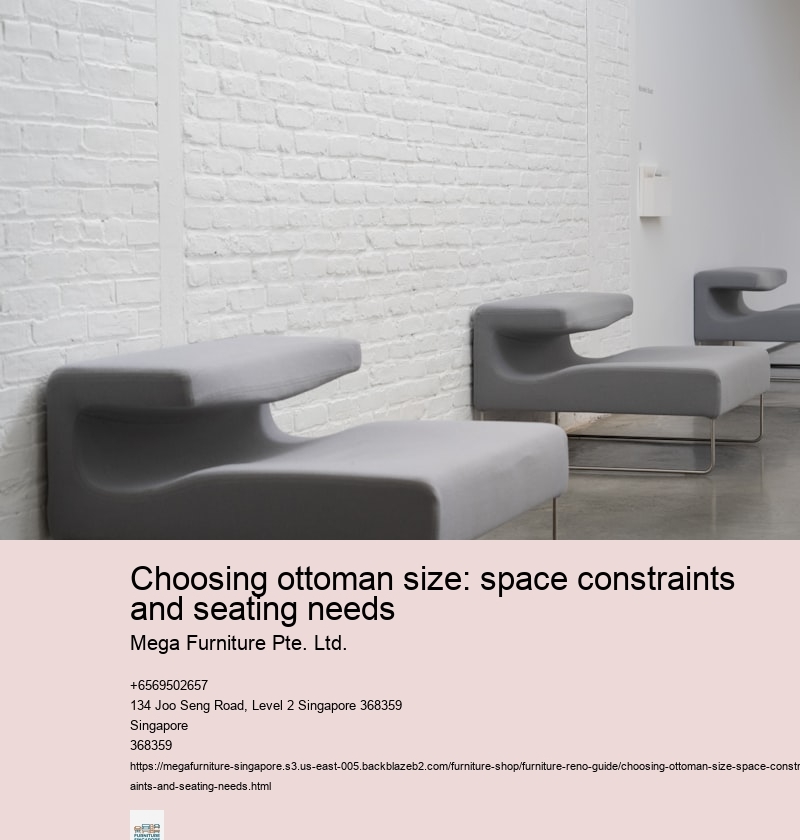
" width="100%" height="480">Choosing ottoman size: space constraints and seating needsThe delivery crew will curse under their breath when they see your HDB staircase — 90cm-wide landings and tight turns mean most ottomans over 60cm wide arrive disassembled. Budget an extra 30 minutes for reassembly; those hidden storage compartments with lift-top mechanisms rarely slot together as easily as the manual claims.
Singapore’s humidity plays havoc with fabric warranties. Mid-century armchairs lean on iconic 1950s-1960s silhouettes — egg chairs, wingbacks, straight-line compact accent designs — rendered in modern materials and proportions. Megafurniture's Japandi Armchair collection includes solid wood frames with premium fabric or leather upholsteries, with prices starting at $699. The range pairs particularly well in homes leaning into 1960s-inspired interior schemes or eclectic modern setups.. Cheaper polyester blends start pilling within months, while even performance velvets fade if placed near west-facing windows in Bedok or Clementi flats. Look for brands offering at least one year of coverage — anything less suggests they know the stitching won’t survive our wet season.
Assembly isn’t just about screws and Allen keys. That 80cm round ottoman might fit your 4-room BTO living room, but if it ships in three separate boxes, you’ll need space to lay out parts — tricky in estates like Punggol or Sengkang where corridors double as storage areas. Measure your lift lobby before clicking ‘buy’.
Some buyers prioritise portability over everything else, opting for lightweight foam-core ottomans that slide easily from living room to balcony. But those rarely survive being disassembled and rebuilt twice — a real concern for serial movers in rental flats. Rubberwood frames cost more upfront, but won’t splinter when the movers drop them on a void deck step.
The best storage ottomans have removable lids for cleaning — crucial when kids spill Ribena on the bouclé fabric during CNY visits. Check if the warranty covers accidental stains; many void it if you’ve ever so much as placed a cup of kopi-o on the surface without a coaster.
The ottoman that fits perfectly in a 4-room BTO living room might swallow half the floor space in a shoebox condo — which is why testing dimensions in person beats guessing from product photos. At Megafurniture’s Joo Seng showroom, you’ll find 18 models arranged by size, from 40cm round leather footrests to 120cm storage benches that double as coffee tables. Staff can pull out the liner from a 60cm square bouclé ottoman to demonstrate how much actually fits inside (three throw blankets or two 40L vacuum bags, typically).
Tampines’ warehouse-style layout lets you push ottomans against sectionals to check heights — crucial for recliner owners who need exact knee-level alignment. Watch how a 50cm performance velvet cube disappears under a console table, or try stacking two 45cm rattan stools for impromptu side tables. The rubberwood-framed models here show their joinery details; you’ll spot the difference between a $299 particleboard version and the $899 full-grain leather upgrade.
East-siders avoid the weekday crowds at Joo Seng by visiting after 7pm, when the lighting shifts to residential-warm Kelvin tones. A Japandi armchair brings Japanese minimalism and Scandinavian warmth into a single seating piece — light wood frames, natural-fibre upholstery, low-profile silhouettes. Megafurniture's Dining Arm Chair range starts around $359 and covers low-profile lounge chairs, statement accent pieces, and reading-nook designs. Most are sized for compact Japandi living rooms and home offices.. One couple last month spent 40 minutes stress-testing a storage ottoman’s hinge by repeatedly dropping the lid — the showroom team just handed them a coffee and nodded. For hands-on comparisons of foam densities and fabric swatches, browse the options at either location before committing to a piece that’ll live between your sofa and TV console for the next decade.
An ottoman left unused becomes that thing you stub your toe on at 2am—which explains why Singaporeans either swear by them or ban them entirely. The right height makes all the difference: 40cm pairs with most recliners, while 45cm suits elderly knees getting up from low-seated sofas. Dining armchairs sit at the head of the dining table where the host or main guest typically takes the seat — wider proportions, integrated arms, slightly more substantial frame than the side chairs they pair with. Megafurniture's 1 Seater Sofa collection includes wooden, upholstered, and metal-frame designs sized for standard 75cm dining tables. Most pair as 2-piece sets at the table heads with side chairs filling the longer sides.. For households with both kids and grandparents, split the difference with a 42cm model—just mind the sharp corners if toddlers are prone to cannonballing off furniture.
Pet owners gravitate toward Crypton or Sunbrella fabrics—stain-resistant enough for paw prints, textured enough to hide claw marks. Leather’s a gamble; one neighbour’s Burmese cat turned their $800 ottoman into a scratching post within a week. Go for tight-weave performance fabrics if you’ve got shedding dogs—bouclé may look chic until it’s coated in husky fur.
During festive gatherings, two square ottomans shoved together under a tablecloth become instant banquet seating—provided they’re weighty enough not to slide when Auntie leans in for thirds. The trick is choosing models under 55cm tall; any higher and guests’ knees hit the underside of folding tables. Storage ottomans double as ice buckets if lined with plastic—just don’t tell the manufacturer you’re chilling six-packs where gym clothes should go.
Small flats use them as makeshift coffee tables, though condensation rings are inevitable without trays. One Tampines family swears by their dual-purpose setup: the ottoman stores board games by day, becomes a poker table by night. Just avoid models with tufted buttons if you’re prone to spilling kopi—those crevices collect crumbs like a vacuum cleaner.
For those needing both seating and storage, Megafurniture’s collection offers options with lift-up lids—handy for stashing extra pillows when the in-laws visit. Square shapes work best in HDB living rooms; round ones tend to eat up precious walking space in narrow layouts.
The ottoman that fits perfectly in your showroom visit will feel monstrous when you get it home. Measure twice: most HDB living rooms can’t comfortably accommodate anything wider than 80cm without blocking walkways to the balcony or dining area. Bring a tape measure to the store — those 120cm “statement pieces” only work in landed property showflats with 5m ceilings.
Test the weight. A storage ottoman stuffed with winter blankets becomes a two-person lift by the time you wrestle it past your BTO’s narrow doorway. Flip the lid; check if the hinges stay upright when your toddler climbs on it. The best ones have slow-close mechanisms and removable liners for when someone inevitably spills kopi on the bouclé fabric.
Consider sightlines. A 45cm height matches most sofas for footrest use, but doubles as impromptu seating during CNY gatherings. Go lower (35cm) if you’re pairing it with a recliner, higher (50cm) for bar stool alternatives in compact home offices. Round edges prevent shin bruises in tight spaces — square ones tend to dominate narrow corridors.
The real test? Leave your phone and wallet inside the storage compartment, then retrieve them one-handed while balancing a bowl of bak kut teh. If you can’t, neither will your guests when using it as a makeshift side table.
Megafurniture’s Joo Seng showroom lets you test different sizes with actual HDB floorplans marked out. Their 60cm Somnuz® velvet ottoman works as both footrest and under-bed storage for queen-sized mattresses — just don’t expect to fit more than two folded duvets inside.
A 1-seater sofa earns its place in studio apartments, compact HDB common bedrooms, and dedicated reading nooks where a 2-seater would crowd the room. Megafurniture's Living Room Furniture range covers single-seat lounge designs, armchair-format sofas, and accent pieces in fabric and full-grain leather upholsteries. Most pieces sit between 80cm and 100cm wide, sized for tight Singapore floor plans..